How Construction Toys Improve Problem-Solving in Children
Play & Learning
How Construction Toys Improve Problem-Solving in Children
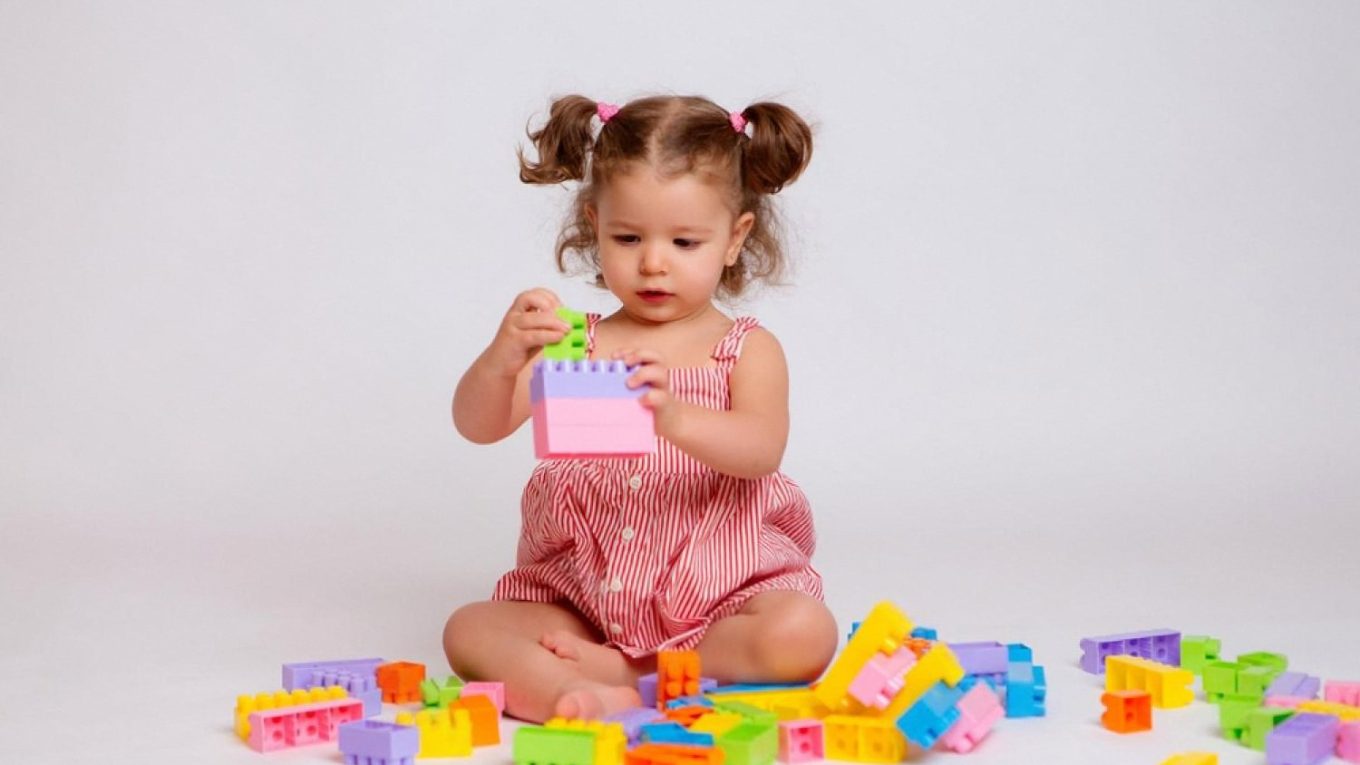
Problem-solving is one of the most useful skills a child can carry into school and adult life. Long before a child studies maths or coding, they practise the same mental moves at the play mat: noticing a wobble, testing a fix, and trying again. Construction toys, from chunky blocks to magnetic blocks toysturn that process into something children choose to do for fun.
Across the UAE, parents in Dubai, Abu Dhabi and Sharjah are looking beyond screens for play that actually teaches something. Nurseries and KHDA-rated schools already use building bricks in early-years rooms because the results show up quickly: children who build daily tend to be calmer when a task goes wrong, and more willing to try a second approach. That habit, keep going, adjust, retry, is the heart of problem-solving.
Five Problem-Solving Wins From Construction Play
- Planning before doing. A child imagines the tower or bridge first, then decides which pieces to use.
- Testing ideas in the real world. If the base is too narrow, it falls. The feedback is instant and honest.
- Learning through trial and error. Rebuilding is not failure, it is the lesson itself.
- Thinking logically. Which piece fits here? What holds weight? Cause and effect become visible.
- Finding creative alternatives. When the plan does not work, the child invents a new one.
What Counts as a Construction Toy?
The category is wider than most parents realise. It includes classic wooden building blocks, interlocking plastic bricks like LEGO and DUPLO, magnetic tiles and rods, engineering kits with gears and axles, marble runs, and foam or fabric stacking sets for babies. Each format teaches a slightly different skill, but they share one trait: the child is the one deciding what to build, not following a screen.
In UAE toy shops and online stores you will find all of these side by side, often marked with an age range on the box. That range matters. A toy that is too easy bores a child; one that is too hard frustrates them. The sweet spot is a set the child can just about manage with some effort, which is exactly where problem-solving happens.
Skills That Grow Alongside Problem-Solving
Spatial and motor skills
Fitting pieces together builds spatial awareness and fine motor control. Research summarised by Wikipedia on spatial visualisation links this ability to later success in STEM subjects.
Maths and engineering thinking
Counting bricks, matching shapes, and balancing loads introduce early geometry and physics without a single worksheet.
Patience and teamwork
Building with a sibling or classmate teaches turn-taking, negotiating a shared plan, and sticking with a project until it works.
Age-Appropriate Choices, From Toddlers to Teens
For toddlers (roughly 1 to 3 years), large soft blocks and chunky stackers are ideal. The goal is grip, balance, and the joy of knocking a tower down. For preschoolers (3 to 5), DUPLO-sized bricks and simple magnetic tiles let them build houses, animals and vehicles from imagination.
School-age children (6 to 9) enjoy interlocking bricks with more detail, marble runs, and beginner engineering sets. Older children (10 and up) who are drawn to STEM do well with robotics kits, motorised gear sets and advanced magnetic construction, where a wrong angle really does bring the whole structure down.
How Parents Can Get More Out of Building Time
The way an adult joins in changes what the child learns. Instead of finishing a tower for them, sit next to them and ask open questions: “What are you trying to make?” or “Why did that piece fall?” Studies collected by Zero to Three show that this kind of back-and-forth conversation during play is one of the strongest predictors of later reasoning skills.
- Encourage open-ended building. Skip the instruction booklet sometimes and let the child invent.
- Ask them to explain their design. Putting ideas into words deepens the thinking.
- Introduce gentle challenges. “Can you build a bridge a toy car can drive under?”
- Allow mistakes. A collapsed tower is data, not a disaster.
The Bridge to Real STEM Learning
The problem-solving loop a five-year-old uses to steady a wobbly castle is the same loop an engineer uses on a Dubai high-rise: plan, test, notice the weak point, adjust, retest. That is why UAE schools following curricula like MoE, British and IB weave construction play into their early-years and primary programmes, and why coding clubs often start children on physical building sets before any screen.
Architecture, robotics, product design and software all rest on the same habits: breaking a big goal into small parts, tolerating failure, and iterating. Give a child years of practice with bricks and magnetic tiles, and those habits are already in place when the formal subjects arrive.
Frequently asked questions
At what age should a child start playing with construction toys?
Babies as young as 12 months can enjoy soft foam or fabric blocks that they stack and knock over. From around 18 months, chunky plastic bricks like DUPLO become useful. The key is to match the piece size and difficulty to the child’s grip and attention span, not to rush ahead of the age label on the box.
Are magnetic building sets better than traditional blocks?
They are different, not better. Magnetic tiles snap together fast, which lets children build larger, more ambitious structures and explore geometry in three dimensions. Traditional blocks demand more careful balancing, which trains patience and fine motor control. Most children benefit from having both types available.
How long should a child play with construction toys each day?
There is no strict number, but 20 to 40 minutes of focused building a day is a healthy target for preschool and primary-age children. What matters more than the clock is that the play is uninterrupted and screen-free, so the child can enter a real problem-solving flow instead of switching tasks every few minutes.
Do construction toys really help with school subjects like maths?
Yes, in a foundational way. Children who build regularly develop stronger spatial reasoning, which is linked to performance in geometry, mensuration and later physics. Sorting, counting and pattern-making with bricks also introduces early number sense without the pressure of formal lessons.
My child gives up quickly when a build fails. What can I do?
Start with sets that are slightly below their current ability, so they get the satisfaction of finishing. Sit with them and narrate your own attempts out loud, including the mistakes. Praise the effort and the retry, not just the finished tower. Over a few weeks, most children become noticeably more willing to stick with a tricky build.
Are construction toys good for group play or only solo play?
Both work well. Building alone helps a child focus deeply on their own plan. Building with siblings, cousins or classmates adds negotiation, shared goals and communication, all of which are problem-solving skills in themselves. Many UAE nurseries deliberately set out a large shared brick area for exactly this reason.
Where can I buy quality construction toys in the UAE?
You will find reputable brands in major toy retailers across Dubai Mall, Mall of the Emirates and Yas Mall, as well as through specialist online stores that ship across the Emirates. Look for ESMA or G-Mark certification, clear age labelling, and safety-tested materials. Investing in one well-made set usually beats several cheap ones that break or lose pieces.

I am an award-winning freelance writer who specializes in finance topics. With over ten years of experience, I have been published in the Wall Street Journal, the New York Times and numerous trade journals, including the Harvard Business Review.